
Real-Time Streaming with Server-Sent Events
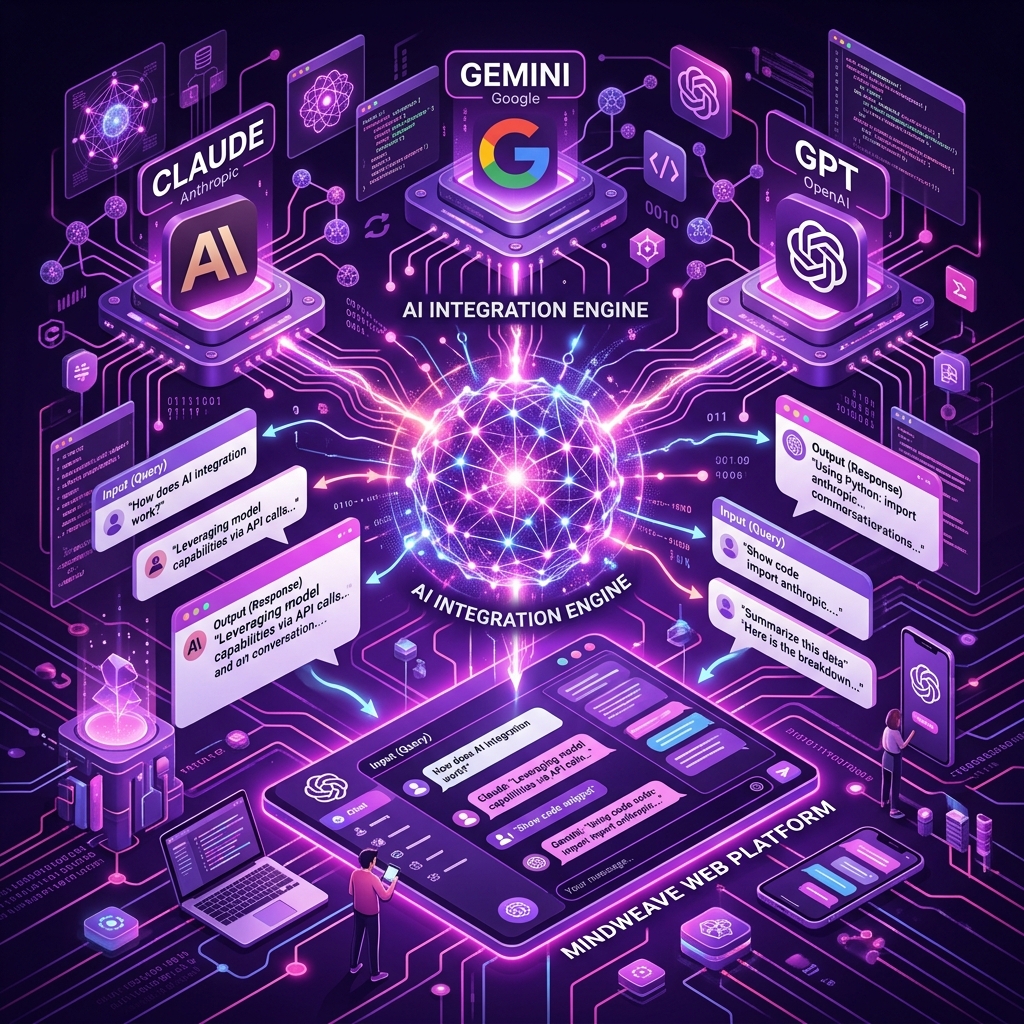
Streaming token responses asynchronously is essential for zero-latency conversational interfaces. In 2026, web frameworks provide first-class native primitives for streaming responses.
js
// Next.js App Router streaming API endpoint
import { streamText } from 'ai';

export async function POST(req: Request) {
  const { messages } = await req.json();

  const result = await streamText({
    model: 'gemini-2.0-flash',
    messages,
    system: 'You are an expert full-stack developer assistant.',
  });

  return result.toDataStreamResponse();
}
Structured Outputs with JSON Schemas
Instead of fragile regex parsing, modern LLMs support strict Zod schemas, guaranteeing type-safe data returns that plug directly into your React state and UI components.
js
import { generateObject } from 'ai';
import { z } from 'zod';

const BlogSummarySchema = z.object({
  keyTakeaways: z.array(z.string()),
  estimatedReadingTime: z.number(),
  tags: z.array(z.string()),
});

export async function summarizeArticle(content: string) {
  return await generateObject({
    model: 'claude-3-7-sonnet',
    schema: BlogSummarySchema,
    prompt: `Summarize this article: ${content}`,
  });
}