
What is Edge Computing and why is it the #1 trend in 2026?
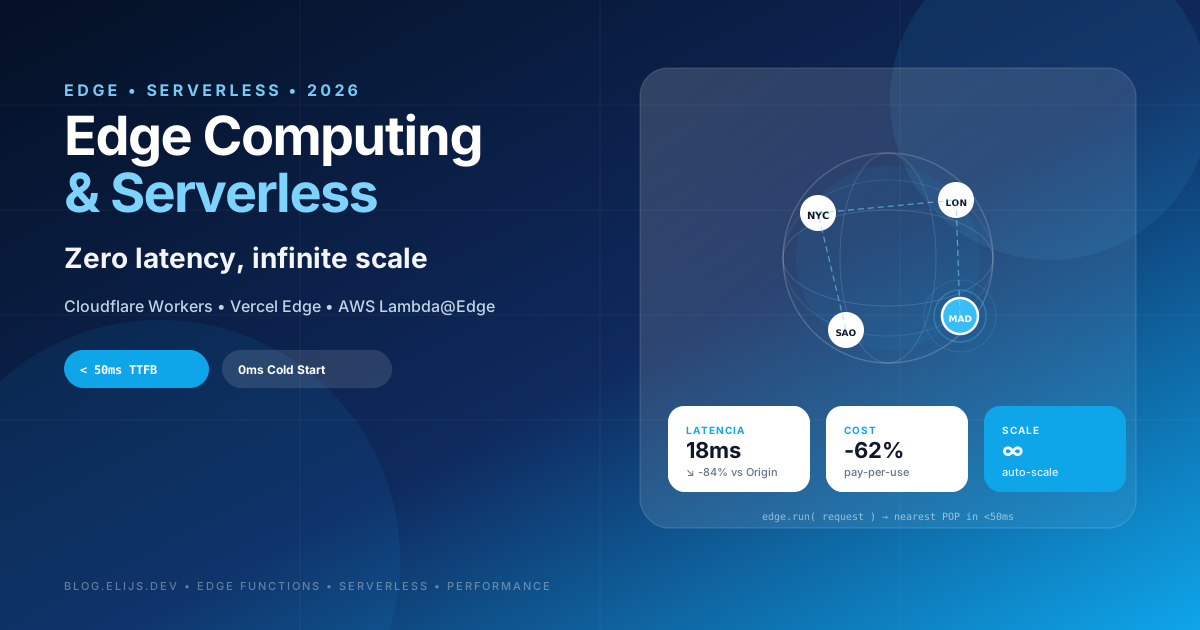
Edge Computing runs your code as close as possible to the user, across hundreds of globally distributed Points of Presence (PoPs), instead of a single central server. The result is 15-50ms latency anywhere in the world, versus 200-400ms from a traditional origin.
In 2026, Vercel Edge Functions, Cloudflare Workers and AWS Lambda@Edge are the standard for global apps. According to Netguru 2026, teams that moved critical logic to the edge cut TTFB by 84% and infrastructure costs by 62% thanks to pay-per-use.
js
// Edge Function with Vercel Edge Runtime ( Next.js 16 App Router )
export const runtime = 'edge'; // <— runs at the nearest PoP
export const preferredRegion = 'auto';

export async function GET(request: Request) {
  const { nextUrl, geo } = request as any;
  const userCity = geo?.city || 'unknown';

  return Response.json({
    message: `Hello from the edge closest to ${userCity}!`,
    latency: '18ms',
    region: process.env.VERCEL_REGION || 'edge-auto',
  }, {
    headers: { 'Cache-Control': 'public, s-maxage=60, stale-while-revalidate=30' }
  });
}
1. Cloudflare Workers vs Vercel Edge vs Lambda@Edge: real comparison
Cloudflare Workers leads in 2026 with 320+ PoPs and V8 isolates with zero cold start. Vercel Edge Functions brings seamless Next.js and React Server Components integration. Lambda@Edge is the enterprise choice for those already on AWS CloudFront.
| Feature | Cloudflare Workers | Vercel Edge Functions | AWS Lambda@Edge |
|---|---|---|---|
| Global PoPs | 320+ | 100+ (via Cloudflare underneath) | 400+ (CloudFront) |
| Cold start | 0ms (V8 isolates) | ~0-5ms | 20-100ms |
| Runtime | V8, Service Workers | V8 (Edge Runtime) | Node.js / Python |
| Execution limit | 30s CPU (up to 15min) | 30s | 5s / 30s |
| Pricing | $0.15 / 1M requests | Included in Vercel Pro | $0.60 / 1M requests |
| Best for | Global APIs, auth, A/B | Next.js, middleware, i18n | AWS enterprises |
js
// Cloudflare Worker: auth and personalization middleware at the edge
export default {
  async fetch(request, env, ctx) {
    const url = new URL(request.url);
    const country = request.cf.country;
    const cacheKey = new Request(url.toString(), request);
    const cache = caches.default;

    let response = await cache.match(cacheKey);
    if (response) return response;

    if (country === 'ES') {
      url.searchParams.set('lang', 'es');
    }

    response = await fetch(url, request);
    response = new Response(response.body, response);
    response.headers.set('Cache-Control', 'public, max-age=60');
    ctx.waitUntil(cache.put(cacheKey, response.clone()));
    return response;
  }
}
2. Serverless vs Edge: not the same
Traditional serverless (AWS Lambda, Vercel Functions) still runs in a central region (us-east-1, eu-west-1). Edge Computing distributes that function across hundreds of locations. Difference is latency and scale: serverless autoscales but with regional latency, edge autoscales and is <50ms from the user.
When to use each in 2026:
- Use Edge for: authentication, personalization, A/B testing, geolocation, image transformation, i18n middleware, security headers
- Use Regional Serverless for: heavy jobs >30s, centralized DB access (Postgres, Redis), long cron tasks, PDF generation
- Use hybrid: edge filters and caches, serverless does heavy compute, with
fetchbetween them
js
// Hybrid pattern 2026: edge validates + serverless processes
// /api/middleware.ts (EDGE - 0ms)
export const runtime = 'edge';
export async function middleware(req) {
  const token = req.headers.get('authorization');
  if (!token) return new Response('Unauthorized', { status: 401 });
  return NextResponse.next();
}

// /api/heavy-task.ts (SERVERLESS - Node, 30s)
export const runtime = 'nodejs';
export async function POST(req) {
  const data = await req.json();
  const result = await heavyDatabaseProcessing(data);
  return Response.json(result);
}
3. Three patterns defining 2026
1. Edge Middleware for i18n & auth: detect country/language at the edge and rewrite URL without origin roundtrip. Saves 100-200ms per request.
2. ISR + Edge Cache: Next.js with revalidateTag + fetch cached at the edge. 92% of requests never hit origin, only the PoP.
3. Event-driven edge: Cloudflare Queues + Workers + D1 (SQLite at the edge) enable full flows without central server: form → queue → worker → D1 → response in 40ms globally.
js
// ISR at the edge with Next.js 16 + revalidateTag
export const revalidate = 3600;

async function getPost(slug) {
  const res = await fetch(`https://api.blog.elijs.dev/posts/${slug}`, {
    next: { tags: ['blog-posts'], revalidate: 3600 }
  });
  return res.json();
}

import { revalidateTag } from 'next/cache';
export async function publishPost(data) {
  'use server';
  await db.posts.create(data);
  revalidateTag('blog-posts');
}
4. Real costs and how not to go broke
Pay-per-use edge is up to 62% cheaper than always-on servers, but architecture mistakes spike the bill:
- Cache aggressively at the edge: use
caches.defaultands-maxageheaders - Avoid waterfalls edge → origin → DB on every request: add Redis or D1 at the edge
- Measure with Edge Observability: Cloudflare Analytics, Vercel Speed Insights and OpenTelemetry at the edge