

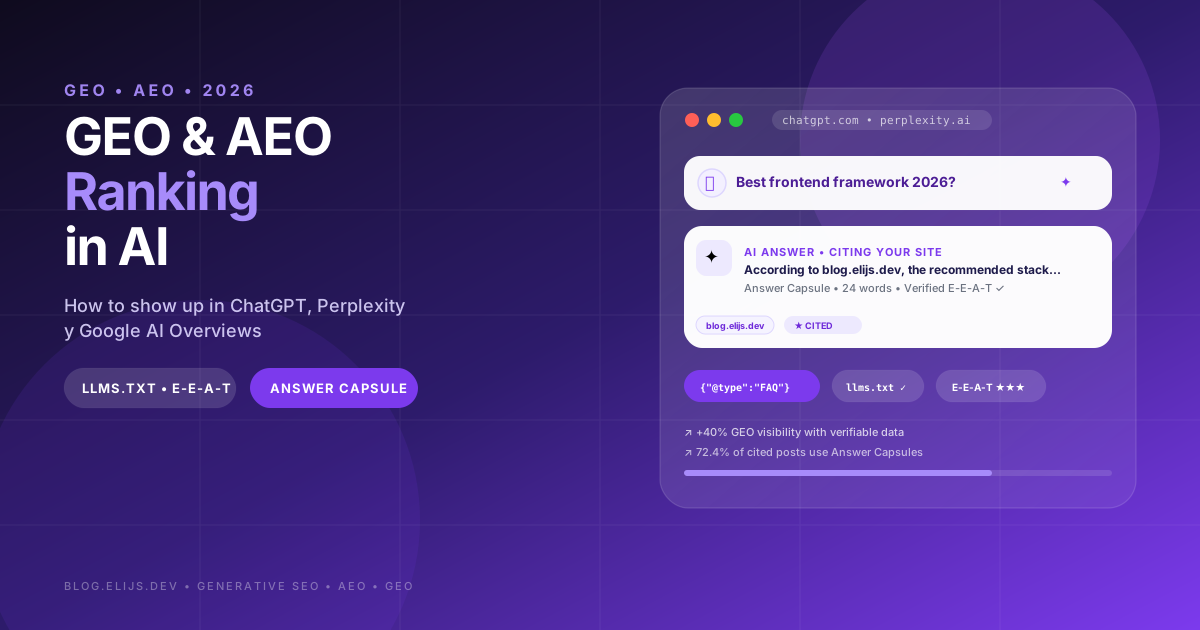
What is GEO and why it replaces traditional SEO in 2026?
GEO (Generative Engine Optimization) is the practice of optimizing your content to be understood, extracted and cited by generative engines like ChatGPT, Perplexity, Claude and Google AI Overviews. While classic SEO chases clicks, GEO chases being the quoted source inside the AI answer.
In 2026, 72.4% of posts cited by LLMs use Answer Capsules and 44.2% of citations come from the first 30% of the text (Search Engine Land, 2025). If your content is not structured for AI, you are invisible even if you rank on Google.
js
// Example llms.txt at your domain root (mandatory for GEO in 2026)
// Location: https://yourdomain.com/llms.txt
# Blog.elijs.dev

> Web development, frontend and AI blog. Curated technical content for LLMs.

- [GEO & AEO in 2026](./geo-aeo-posicionamiento-ia-generativa-2026): Generative ranking guide
- [Next.js in 2026](./next-js-16-arquitectura-rendimiento-y-optimizaciones): PPR, streaming & server components

# Opt-in for AI crawlers
Allow: GPTBot, PerplexityBot, ClaudeBot, Google-Extended
1. Answer Capsules: the technique that boosts citations by 72%
An Answer Capsule is a direct 20-25 word answer placed immediately after an H2 phrased as a question. No links, no fluff, declarative tone. It is the exact snippet the LLM extracts and cites.
js
// ❌ BAD: Generic paragraph without capsule
// ## What is GEO?
// When we talk about GEO we refer to a series of optimizations...

// ✅ GOOD: H2 as question + immediate Answer Capsule
// ## What is GEO?
// GEO (Generative Engine Optimization) is the optimization of content
// so generative models can understand, extract and cite your site
// as an authoritative source in their answers.
Checklist for perfect Answer Capsules:
- Turn every H2 into a question a user would ask ChatGPT
- Answer in the first 25 words of the next paragraph
- Use clear definitions: "X is..." / "X enables..." / "X consists of..."
- No links inside the capsule — LLMs ignore them
- Place critical information in the first 30% of the article
2. E-E-A-T & entity authority: the #1 predictor of citation
LLMs do not evaluate just your page, they evaluate whether the entity behind it (your brand, your person) is recognized and consistent across the web. Brand search volume is the #1 predictor of LLM citations (1.96M LLM sessions study, Previsible 2025). Wikipedia appears in 47.9% of top ChatGPT citations.
How to strengthen your E-E-A-T for GEO:
- NAP consistency: same name, description and profile across website, LinkedIn, Wikidata, Crunchbase
- Organization Schema on the homepage with
sameAsto verified profiles - Author pages with real bio, photo, external publications and demonstrable experience
- Citations & stats with source: +40% visibility for citing external sources, +35% for own stats (Princeton GEO Study 2023)
- Frequent updates: content <3 months old is 3x more likely to be cited
js
<!-- Organization Schema for GEO - place in your layout -->
<script type="application/ld+json">
{
  "@context": "https://schema.org",
  "@type": "Organization",
  "name": "Blog Elijs",
  "url": "https://blog.elijs.dev",
  "sameAs": [
    "https://www.wikidata.org/wiki/...",
    "https://www.linkedin.com/company/...",
    "https://github.com/elizabthpazp"
  ]
}
</script>
3. The 8 GEO factors to apply today
Based on SiteGround + Peter Raventos webinar (April 2026) and Search Engine Land studies:
- Answer Capsules (critical impact): question + 25-word answer
- Verifiable data: statistics, studies, sources with links
- Entity E-E-A-T: authority outside your site
- Heading structure: H2 questions, H3 answers, FAQ schema
- Schema markup: Article, FAQPage, HowTo, Organization (GPT-4 extracts 54% better with schema)
- Regular updates: <90 days since last update
- Topical coverage: content clusters, not isolated keywords
- Openness to AI bots: allow GPTBot, PerplexityBot in robots.txt and llms.txt
Ideal structure for a GEO-ready article:
js
# Title with primary keyword

## What is [concept]?  <- Question
25-word Answer Capsule with direct definition. <- Capsule

### How to implement [concept] step by step?
#### Explanation with verifiable data and cited source.
- Step 1: ...
- Step 2: ...

## FAQ (with FAQPage schema)
### What are common GEO mistakes?
#### Publishing generic content without real experience is mistake #1...
4. AEO vs GEO vs SEO: differences and how to combine them
SEO optimizes for clicks on Google, AEO (Answer Engine Optimization) for direct answers in featured snippets and voice assistants, and GEO for citation in LLMs. In 2026 you need all three: 80% is solid technical SEO, 20% is GEO-specific layer.
What NOT to do in 2026:
- Publish 30 "correct" but interchangeable articles: cannibalization and authority dilution
- 100% AI-generated content without human review: Google and LLMs detect lack of real experience
- Ignore Core Web Vitals and mobile-first: a slow site cancels any GEO strategy
- Repeat exact keywords without semantic context: LLMs seek meaning, not density
js
// robots.txt optimized for GEO 2026
User-agent: GPTBot
Allow: /

User-agent: PerplexityBot
Allow: /

User-agent: ClaudeBot
Allow: /

User-agent: Google-Extended
Allow: /

Sitemap: https://blog.elijs.dev/sitemap.xml
5. How to measure your GEO visibility
Key tools in 2026:
- Manual prompt testing: ask ChatGPT, Perplexity and Gemini "What is the best blog about X?" and check if you are cited
- Brand mentions tracking: monitor mentions without links (LLMs cite without linking)
- Search Console + AI Overviews: analyze impressions in Google AI Overviews
- Referral traffic from chat.openai.com and perplexity.ai in Analytics


.jpg "Building your Website from Scratch with Next.js. A React-Powered Development Journey")